Transparency
Camera-Based Photography in the Age of Artificial Intelligence
Photography originates from the Greek words phōs (light) and graphê (drawing or writing), literally meaning “drawing with light” or “writing with light.”
Photography is the art and process of using a camera to record real light reflected from real subjects in the physical world, creating an image that captures a moment in time. At its core, photography is the act of transforming light into a visual record—preserving the appearance, mood, and essence of a scene.
— Fred Ritchin
Former Dean Emeritus of the International Center of Photography (ICP), regarding photographs
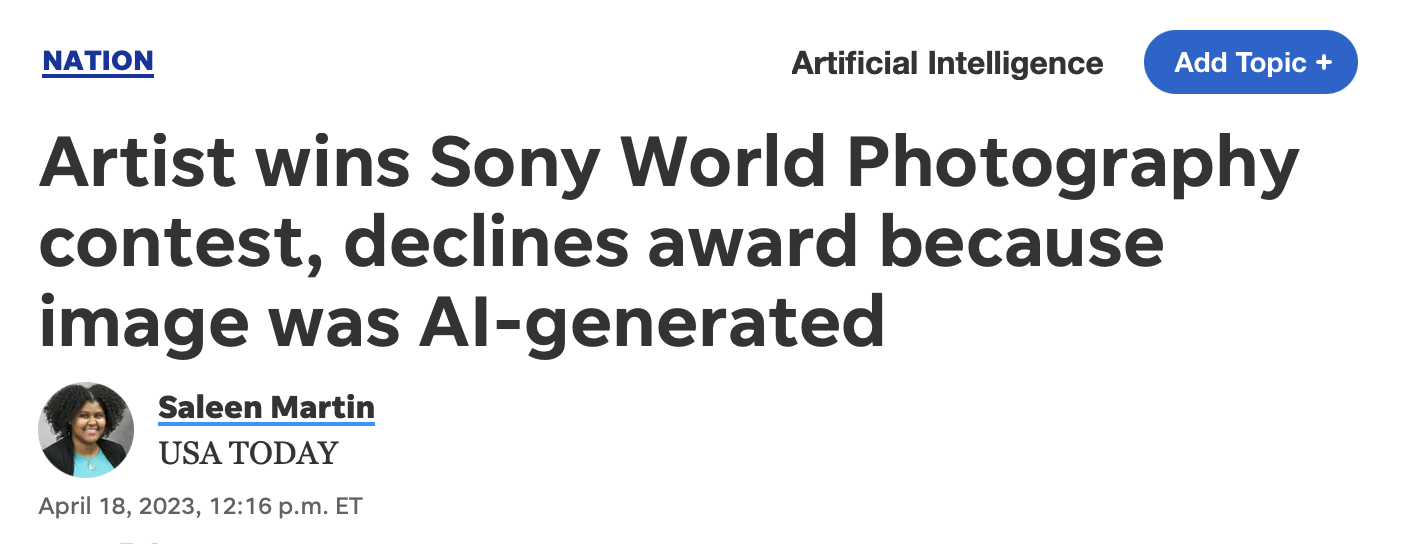
—- Artificial Intelligence wins photography award
Documentary Realism and Computer Generated Imagery
My photography is rooted in Documentary Realism, and every image is created with a camera. In an era when photographers often spend more time behind a computer than behind a camera, images are increasingly being created in ways that depart significantly—or entirely—from reality.
Exceptional moments in nature require patience, persistence, and time afield—often returning to the same location again and again, waiting for the rare convergence of light, weather, and action. Increasingly, however, that dedication is being replaced technology. Rather than waiting for a remarkable moment to unfold in nature, an unremarkable scene is captured and later transformed through extensive digital manipulation, and made so realistic, even judges can’t tell the difference.
With the use of artificial intelligence, generative fill, and increasingly sophisticated software, entire landscapes can now be created or altered behind a keyboard, a computer, and a cup of coffee. A lake from one location can be placed before a famous mountain range from another, skies can be replaced, wildlife added or removed, and elements generated that were never present when the photograph was made.
My approach is different. Rather than creating scenes on a computer, all of my scenes are made only by me with a camera and lens. To me, there is a difference between camera based versus digitally constructed imagery, and I hope you appreciate the distinction.
“Fine Art Photography” — What’s in a Title?
The term Fine Art Photography in a business name often implies that the photographer exercises artistic license and may depart from strict reality in pursuit of a personal creative vision. Contrary to a common misconception, the phrase does mean that the work is inherently more refined, exceptional, or superior in quality than other forms of photography.
I believe that investors of photographic art deserve transparency regarding how an image was created. Was it photographed in the field? Was artificial intelligence used? Were major elements added, removed, replaced, or fabricated?
These are fair and important questions, rather than arguments such as:
“If a client doesn’t ask, it’s not my responsibility.”
“The viewer should already understand how the image was made.”
“If someone likes the image, how it was made doesn’t matter.”
How an image was made does matter—especially when it is presented and sold as photographic art.
My Approach
My work is created in the field and rooted in the time-honored traditions of camera-based photography practiced by masters such as Ansel Adams, Eliot Porter, Galen Rowell, and Thomas Mangelsen. It is a tradition built on patience, fieldcraft, and respect for the natural world—a commitment to discovering extraordinary moments rather than creating them on a computer.
Photography exists along a continuum of artistic interpretation, with many valid approaches and creative expressions. What cuts through the fog is simple transparency from the artist about how an image was created. I pledge with you to be open and honest about my process, so those who enjoy my work can make informed decisions before investing in me.
— David James Winegar